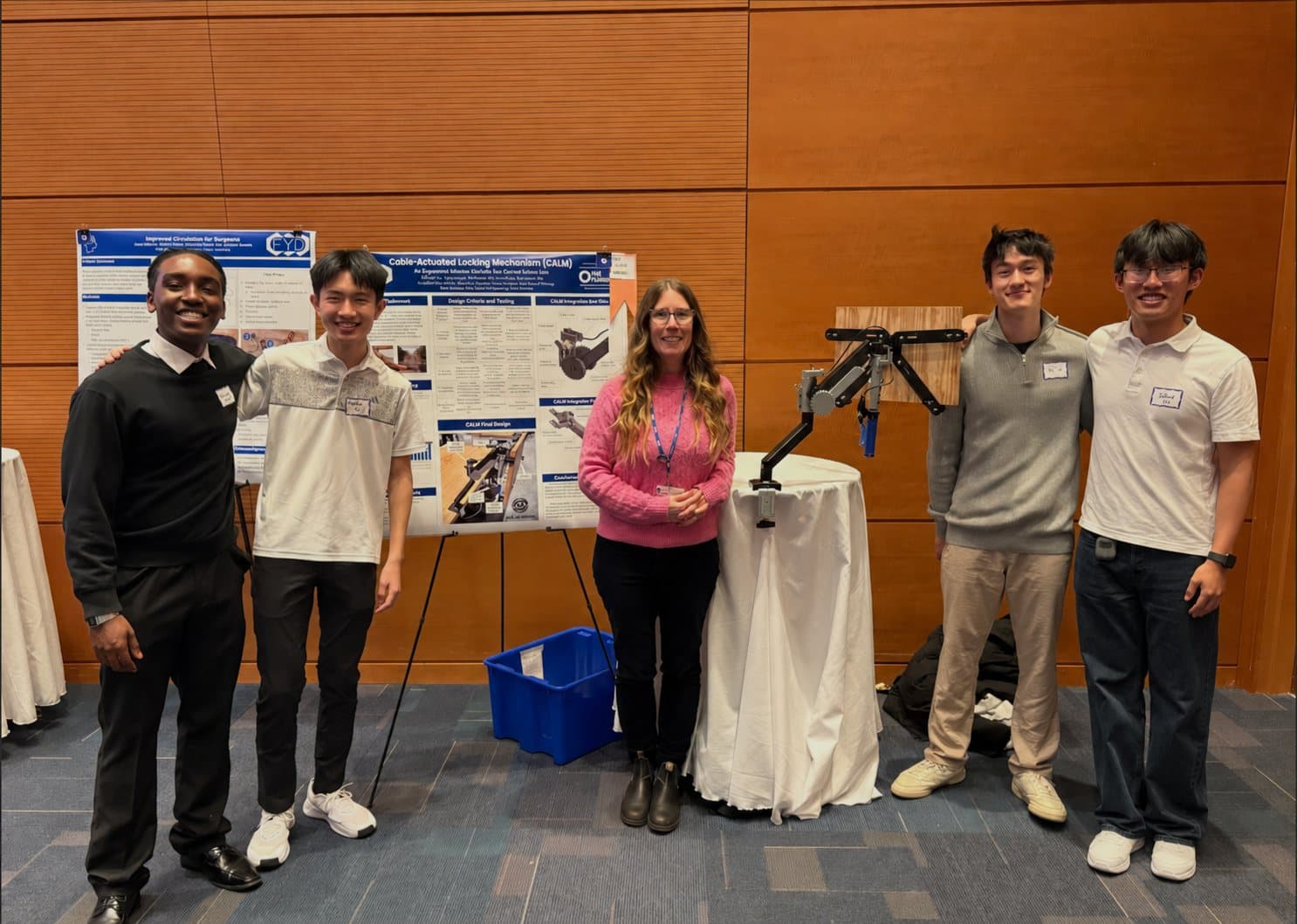
We started out trying to build a better monitor arm, and ended up not building an arm at all.
CALM is an ergonomic monitor solution for people with central vision loss. I helped run the focus groups, turned what we heard into requirements, led a team of four through 60+ concepts, and killed our own full-arm design after a load test showed we were solving the wrong half of the problem.
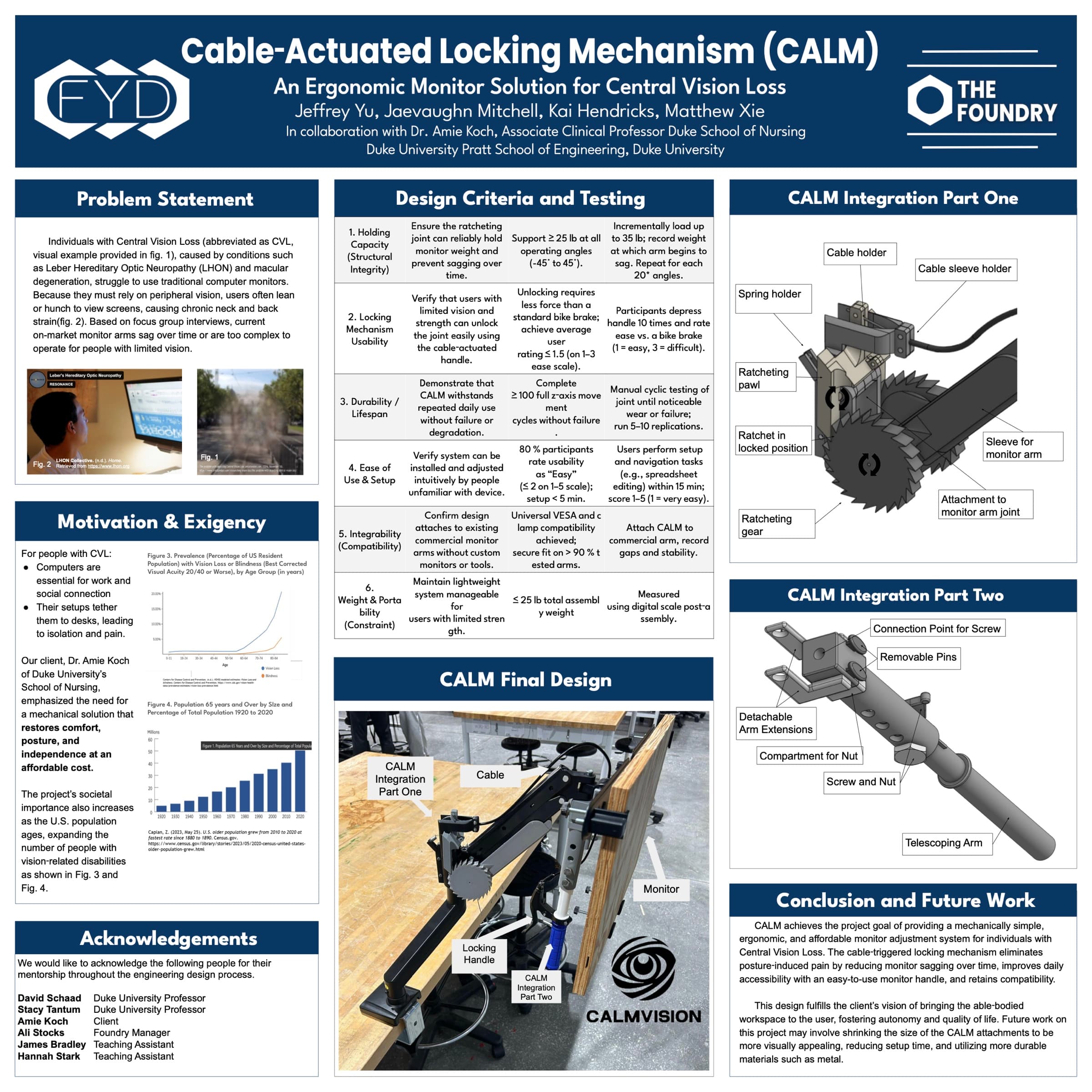
What we ended up with is narrower: a cable-actuated lock that clips onto the monitor arm someone already owns.
Why people end up hunched over
People with central vision loss don't need another screen. They need the screen they already use to sit somewhere their body can tolerate.
Central vision loss puts a blind spot in the middle of the visual field, so reading a monitor happens through peripheral vision. In practice that means leaning in and hunching over, hours at a time. The people we talked to told us what that costs them: rib inflammation, migraines, problems in the lower spine.
Two focus groups with five people living with central vision loss gave us three constraints:
- Don't replace the monitor. Participants worked on 32 to 36 inch displays at up to 1200% magnification.
- Don't rely on grip or precision. Controls had to work by feel.
- Don't build another arm that sags. Every participant who'd tried a monitor arm said it eventually dropped.
One participant had been through six of them. That changed how I read the brief — reach only matters if the monitor stays where he puts it.
What's already on the desk
A new arm could work on paper, but it would ask people to give up the large displays and desk setups they'd already built around. It would also put us on the hook for load-bearing hardware, counterbalance, durability, and manufacturing all at once.
So the direction became:
Make an existing commercial monitor arm usable for someone with central vision loss.
That gave us something to build against. Whatever we made had to fit hardware people already had, hold a large screen under load, release without anyone needing to see it clearly, and fail safely.
60 ideas down to seven
We broke the monitor arm into five subsystems — long extension, clamping, locking, display, and mobility — and generated 60+ concepts against them as a team. Pugh matrices narrowed each subsystem, then a morph chart recombined the strongest ideas into seven whole-system directions.
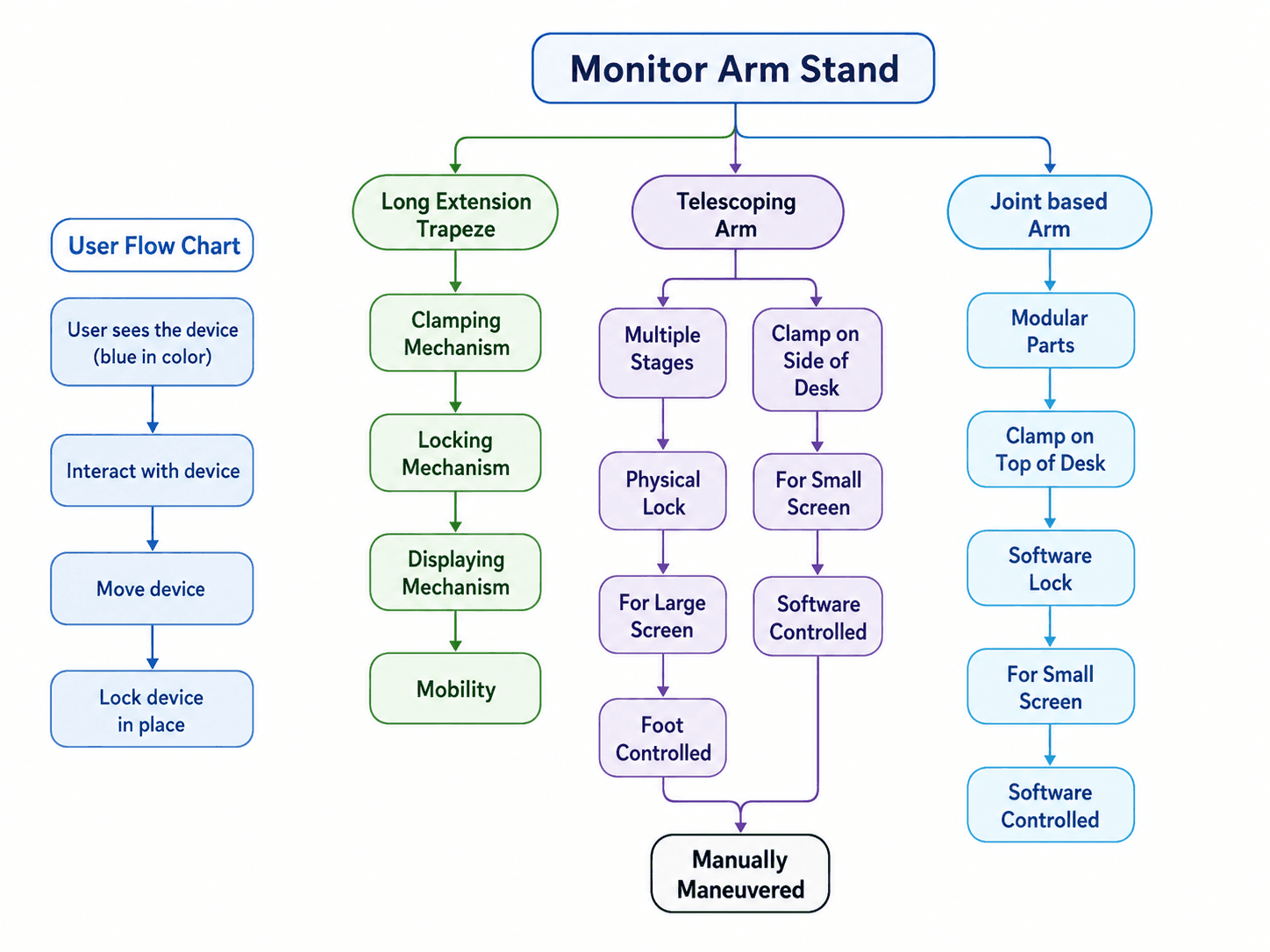
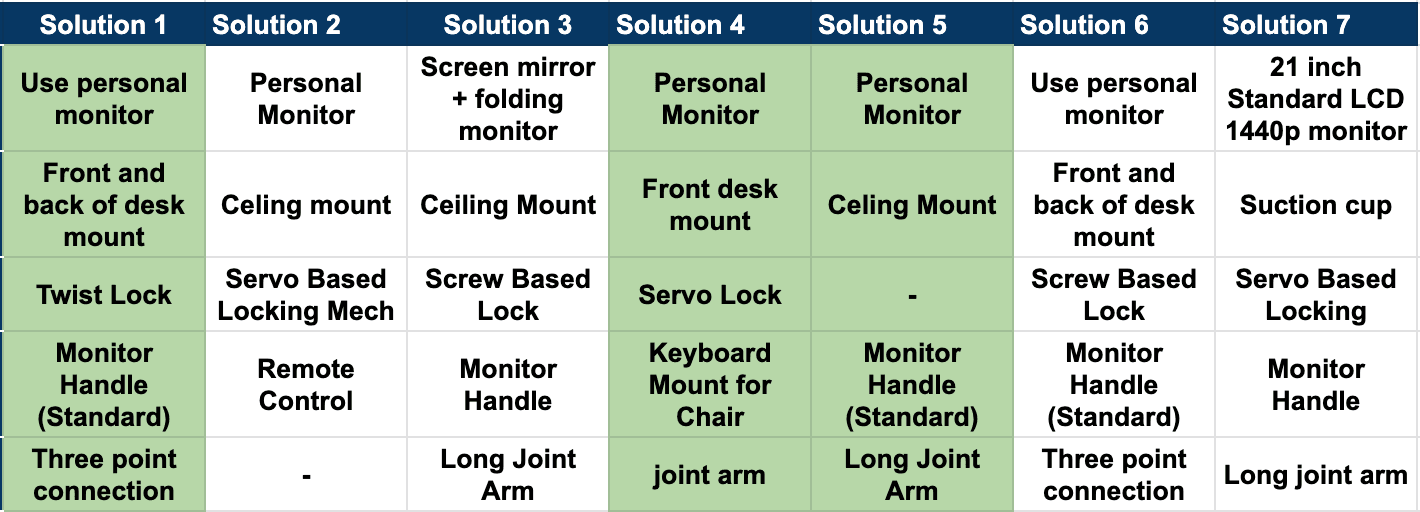
The three that scored highest all had the same assumption buried in them: that we'd build the full arm ourselves. That held up fine in a matrix and fell apart as soon as we printed one.
Making a heavy monitor feel light
One requirement mattered more than the others. If someone has to fight the weight of a 32-inch monitor every time they move it, they won't move it. They'll go back to leaning.
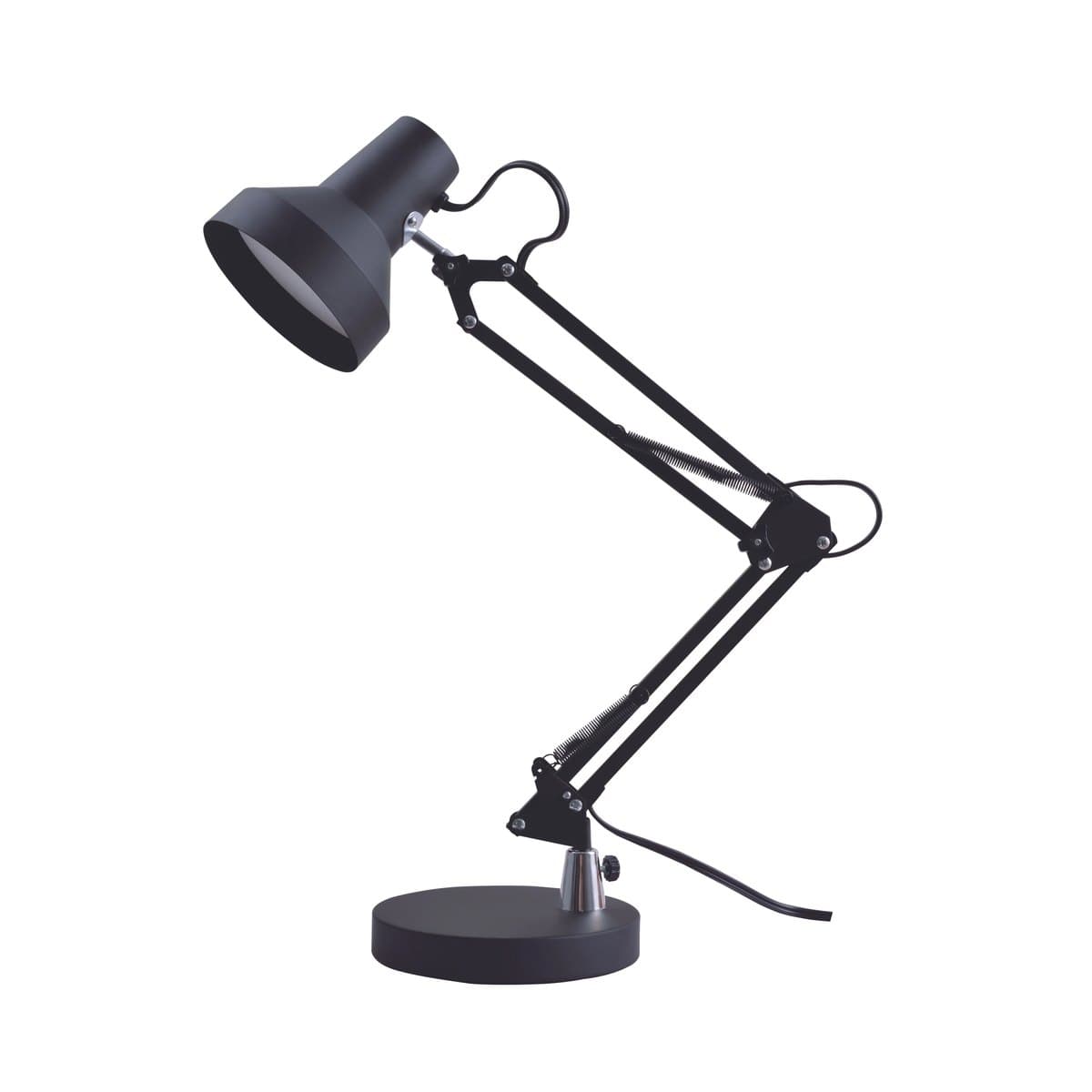
The reference I kept coming back to was an architect's desk lamp. Two springs across a parallel linkage offset the weight of the head, so you can move it with one finger and it holds wherever you let go. That was the behavior we wanted, and the plan was to build it into a printed arm of our own.
The arm snapped at 22.95 lb
The counterbalance was the harder half. Commercial arms get that same light, responsive feel from a pneumatic gas spring, which we had no way to manufacture in-house in a semester — and they sell for around $25.
So I pushed the team to change what we were building:
- Cut the full replacement arm.
- Kept the requirement that the monitor move easily and stay where it's put.
- Built the part commercial arms don't solve: a lock that holds.
From there CALM became an attachment instead of a replacement.
Why a ratchet
Commercial arms hold position with gas springs or friction joints, and both slip. The load never lets up, so anything holding by friction gives eventually.
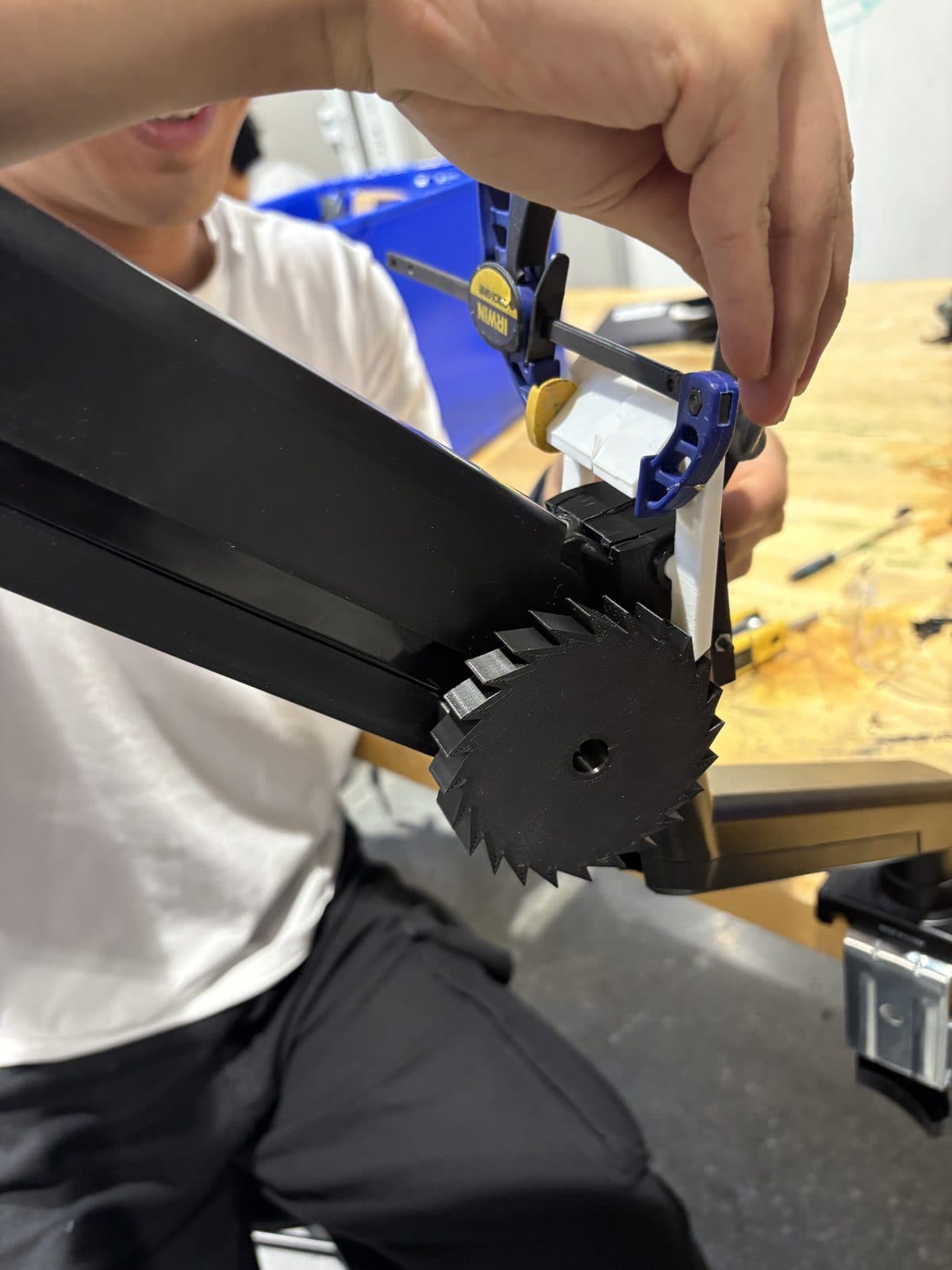
A ratchet doesn't. It holds mechanically under load, releases when the user pulls a cable, and if it fails it fails locked instead of dropping the monitor.
The four fixes that mattered
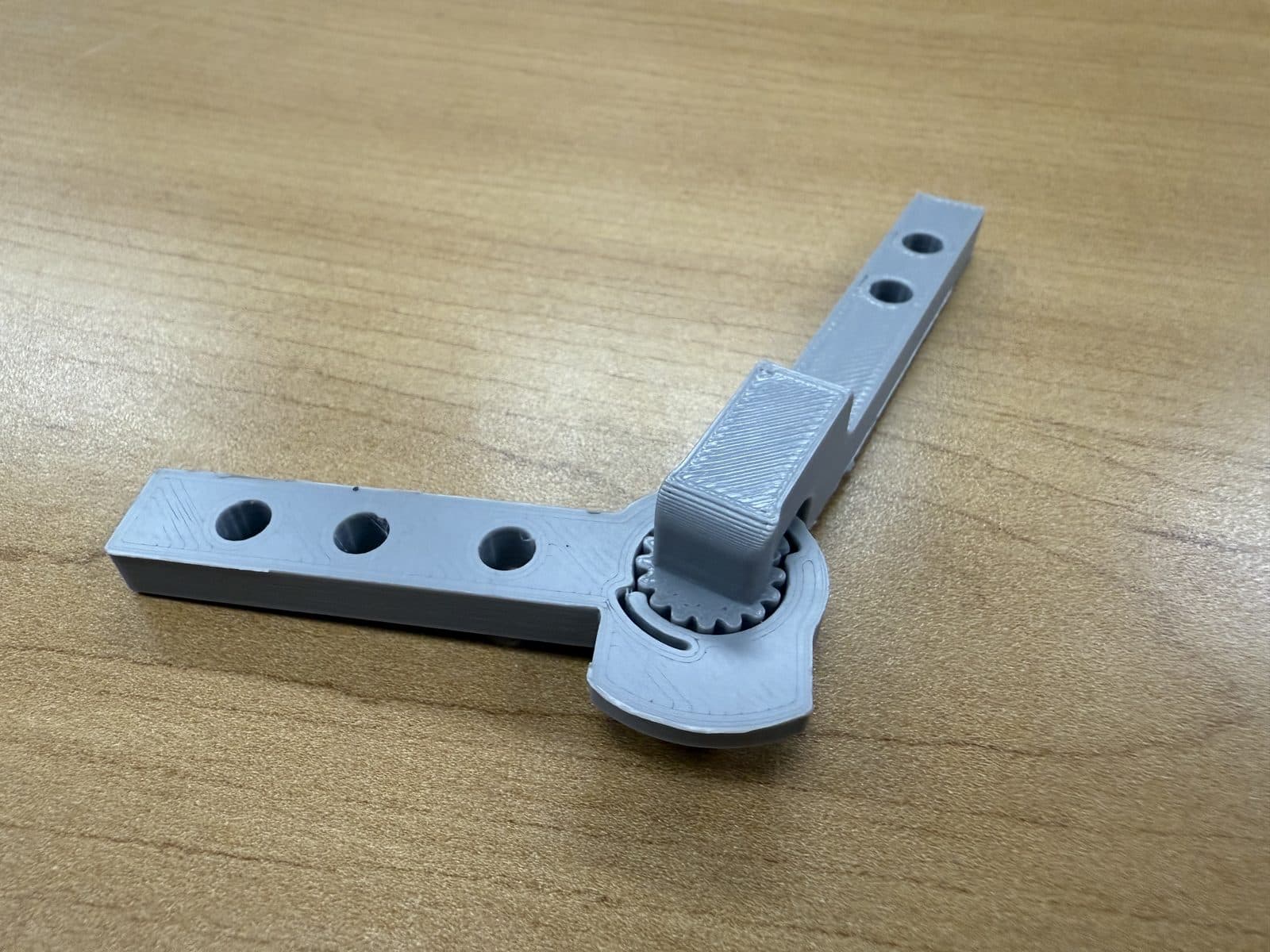
We built around twenty prototypes and logged each one with the question going in and the evaluation coming out. Four changed the design:
- The pin kept skipping teeth. We moved it under the gear so the force drove it straight into the teeth.
- The snap-on case kept popping off. We switched to a case that slides in and then snaps — it stays put.
- Rotating the arm didn't rotate the screen. That's why the monitor handle extension exists.
- The three-point desk mount drifted. We cut it and put the time back into the lock.
Most of the rest was tolerance and assembly: printed parts that needed enough clearance to go together without sanding, while still holding under load.
Did it work?
Every requirement had a number attached to it:
- Holds at least 25 lb at every angle from −45° to 45°
- Loaded to 35 lb to find the safety margin
- Unlocks with less force than a standard bike brake
- Survives at least 100 full movement cycles
- Sets up in under 5 minutes
- Fits more than 90% of tested commercial arms
- Costs under $250 to build
The 25 lb came straight out of the arm that snapped at 22.95. After the pivot that number tested one joint instead of an entire replacement arm.
The finished build ran about $140 in off-the-shelf parts plus printed plastic. We showed it at Duke's First-Year Design showcase, where it won a design award.
What we're fixing now
The pivot solved the scope problem and created a usability one. Our attachment clamps onto the same joint you reach for to tension the arm's built-in spring, and tensioning is how you match the arm to the weight of your particular monitor. Burying that adjustment isn't something we'd ship.
We're still iterating, just slower than during the semester — school, Icarus AI, and other work have cut into the cadence. The next step is specific though: get a version onto the desk of one of the people we interviewed and find out what breaks outside a showcase.
The next revision prioritizes:
- Easier access to spring tensioning
- Smaller housings
- A steadier monitor handle
- A more finished visual design
- Fewer printed parts, so we burn less plastic getting to each revision
The milestone isn't another showcase prototype. It's something someone can mount on their own desk, adjust without fighting it, and use long enough to tell us what still breaks.